
Fork & Embers Recipe
New Mexico Green Chile Cheeseburger Recipe

The Story
In New Mexico, green chile is not just some topping somebody threw on a burger to make it different.
Green chile is part of the identity of the state. It shows up on enchiladas, breakfast burritos, eggs, pizza, french fries, and just about anything else that could use a smoky little kick. Putting it on a cheeseburger feels less like an invention and more like common sense.
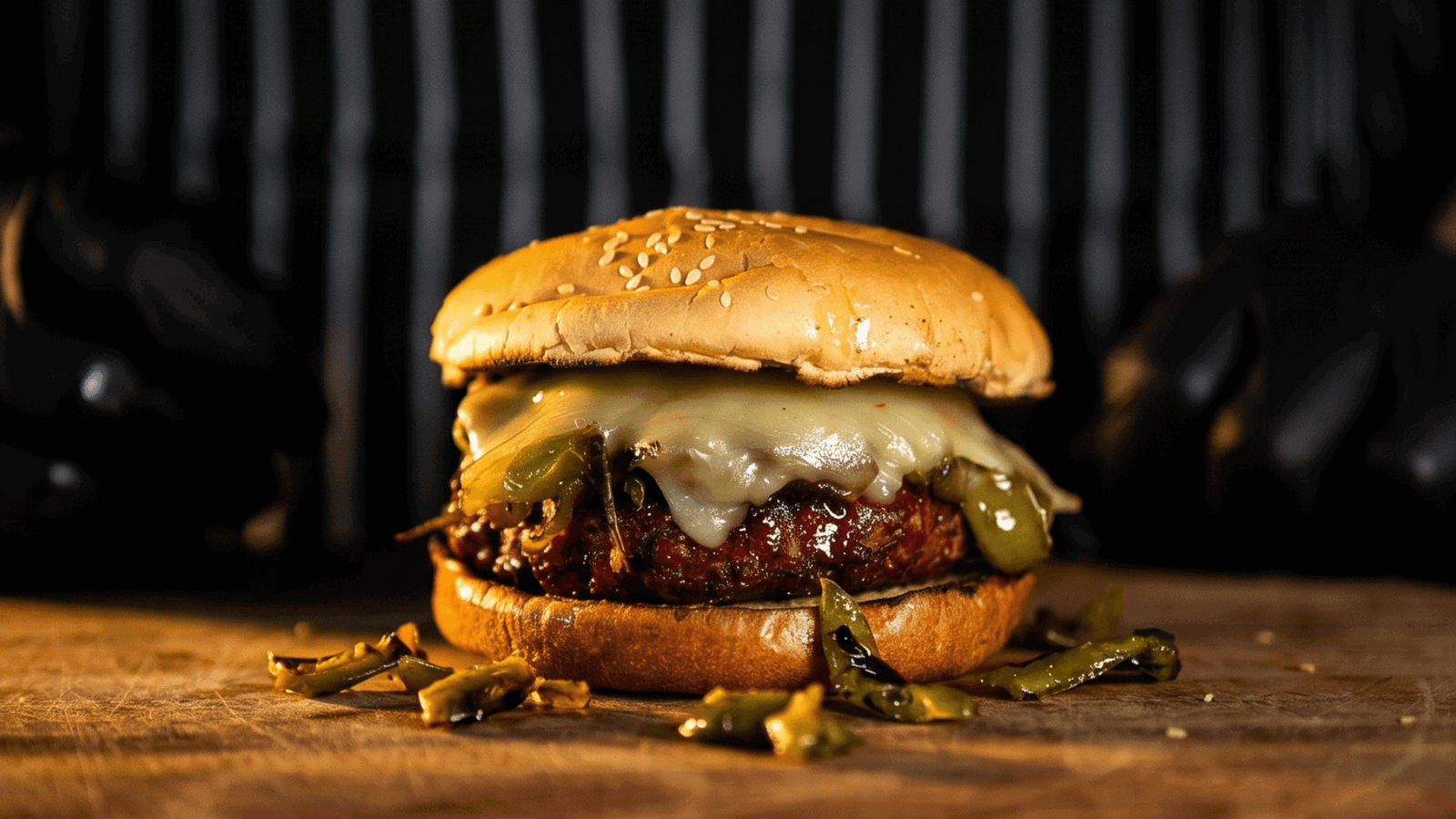
A New Mexico green chile cheeseburger combines a grilled beef patty with roasted green chile and melted cheese. This version starts with fresh peppers blistered over an open flame, peeled, chopped, and slowly cooked until they form a rich, chunky topping.
The green chile goes directly onto the burger, and the cheese melts over the top to help hold all those peppers together.
It is beefy, smoky, slightly spicy, and exactly the kind of burger that makes you wonder why roasted green chile is not standard equipment everywhere.
:recipekit:
What Is a Green Chile Cheeseburger?
A green chile cheeseburger is a hamburger topped with roasted New Mexico green chile and melted cheese.
The defining ingredient is the roasted chile itself. This is not a burger with a little green chile-flavored sauce or a spoonful of salsa. The peppers are charred until their skins blister, peeled, chopped, and piled directly onto the beef.
Different restaurants make the burger in different ways. Some use finely chopped chile, while others leave the peppers in larger pieces or strips. Some serve the burger with mustard, pickles, onions, lettuce, and tomato. Others keep it nearly bare.
The important part is that the green chile remains one of the main flavors.
The History of the Green Chile Cheeseburger
The story of the green chile cheeseburger usually runs through the tiny desert town of San Antonio, New Mexico.
And when I say tiny, I mean tiny.
Somehow, this little town became home to two of the biggest names in green chile cheeseburger history: the Owl Bar & Café and the Buckhorn Tavern.
Both restaurants are connected to the same mid-century New Mexico world of roadside taverns, travelers, workers, soldiers, ranchers, farmers, and local families.
Both also have a claim to the burger.
Like a lot of great regional food histories, nobody can prove every part of the story perfectly.
The Owl Bar & Café
The Owl Bar story begins after World War II, when Frank Chavez and his wife, Dee, opened a small bar in San Antonio.
The way the story goes, customers began asking for food, so Frank installed a grill behind the bar and started making hamburgers.
Those hamburgers eventually became associated with the Owl Burger, a cheeseburger topped with New Mexico green chile.
It was a simple combination of beef, cheese, and an ingredient that was already part of everyday life throughout the state. The Owl Bar eventually became one of the restaurants most closely connected to the early history of the green chile cheeseburger.
It also helped turn San Antonio into a destination for people willing to plan a road trip around lunch.
That is a group of people I understand.
The Buckhorn Tavern
Across the road, the Buckhorn Tavern has its own claim to the story.
Manny Olguin took over the Buckhorn during the 1940s, and the tavern became just as closely associated with the green chile cheeseburger as the Owl.
The Buckhorn came out of that same small-town tavern culture. It served travelers and local customers in a place where hamburgers, drinks, and roasted green chile already belonged together.
That is where the history becomes difficult to settle.
Both restaurants were serving burgers in the same little New Mexico town during the same general period. Both were surrounded by the same chile-growing culture. Both eventually became famous for putting roasted green chile on beef.
Everybody wants a clean answer.
Who made it first? Which restaurant owns the original? What year did somebody finally look at a cheeseburger and realize it needed green chile?
The honest answer is that nobody can prove it perfectly.
But the better story may not be that one person woke up one morning and invented the green chile cheeseburger out of thin air.
A Cheeseburger With a New Mexico Accent
This burger came from a place where green chile was already part of everyday life.
Farmers were growing chile. Roadside bars and cafés were feeding travelers, soldiers, workers, and local families. Hamburgers were becoming a normal part of American restaurant food.
In New Mexico, the natural move was to put roasted green chile right on top.
That is what makes this burger different.
It is not fancy. It is not trying too hard.
It is a cheeseburger speaking with a New Mexico accent.
How Blake’s Lotaburger Helped Spread the Burger
The green chile cheeseburger did not remain inside the old bars of San Antonio.
In 1952, Blake Chanslor opened the first Blake’s Lotaburger in Albuquerque. Green chile eventually became part of the restaurant’s identity, and the growing chain helped carry the green chile cheeseburger throughout the state.
If the Owl Bar and Buckhorn Tavern represent the old desert-bar chapter of the story, Blake’s represents the chapter where the burger became everyday New Mexico food.
Today, New Mexico even has a Green Chile Cheeseburger Trail, which may be the most convincing argument ever made for planning a road trip around hamburgers.
What Is Hatch Green Chile?
Hatch chile is not one single pepper variety.
The name generally refers to New Mexico-type green chile grown in and around Hatch, New Mexico. Several varieties may be sold under the Hatch name, and their heat levels can range from relatively mild to extremely hot.
Fresh Hatch green chile is also seasonal and can be difficult to find outside the Southwest.
I could not find genuine Hatch-grown chile when I made this recipe, so I used Anaheim peppers as a substitute.
Anaheim peppers have a similar long shape and can be roasted using the same method, but they are not the same thing as true New Mexico chile. They are generally milder and do not have exactly the same flavor.
Use fresh Hatch or another New Mexico green chile whenever it is available. Anaheim peppers will still make a good burger when the real thing is out of season.
How to Roast Green Chile
Roasting the peppers gives the green chile topping its smoky flavor and loosens the tough outer skin.
Place the peppers directly over a gas flame or the direct-heat side of a hot grill. Turn them frequently until the skins are blistered and charred on every side.
Transfer the roasted peppers to a bowl and cover it for about 10 minutes. The trapped steam helps separate the skins from the flesh.
Peel away the loosened skins, then remove the stems and seeds. Try not to rinse the peppers under running water unless absolutely necessary because the water can wash away some of their roasted flavor.
Once the peppers are cleaned, roughly chop them.
How to Make Chunky Green Chile Burger Topping
This green chile burger topping is intentionally simple.
All you need is roasted green chile, oil, and salt.
Heat the oil in a skillet and add the chopped peppers. Cook them over medium-low heat for 30 to 45 minutes, stirring occasionally.
As the peppers cook, they will soften, concentrate, and develop a richer texture. You are not trying to turn them into a smooth sauce. Stop cooking when the green chile reaches the chunky consistency you want on the burger.
Season it with salt to taste.
This recipe makes more topping than you need for two burgers. Keep the extra for eggs, tacos, breakfast burritos, grilled meat, or another round of green chile cheeseburgers.
How to Grill a Green Chile Cheeseburger
Set the grill up with both direct and indirect cooking zones.
Form the ground beef into two wide patties. I make them slightly thinner and wider than the hamburger buns because the patties will shrink and puff as they cook.
Season both sides with salt and black pepper.
Begin cooking the burgers over indirect heat. This slowly brings the centers close to their final temperature without burning the outside.
Once the burgers reach approximately 150 to 155°F internally, move them over direct heat and sear them on both sides.
Cook the ground beef to a final internal temperature of 160°F.
Return the patties to the indirect side of the grill and spoon a generous amount of chunky green chile topping onto each burger.
Place the cheese over the green chile instead of underneath it. As the cheese melts, it helps hold the chopped peppers together and keeps more of the topping on the burger instead of in the grill.
Close the lid and cook until the cheese has completely melted.
Toast the buns, assemble the burgers, and serve them while they are hot.
What Cheese Goes on a Green Chile Burger?
Monterey Jack is a great choice because it melts smoothly without overpowering the roasted green chile.
Pepper Jack adds another layer of heat and works especially well when mild Anaheim peppers are used in place of hotter New Mexico chile.
American cheese, mild cheddar, or another good melting cheese can also work.
The chile should remain the dominant flavor, so avoid using a cheese so strong that it buries the roasted peppers.
Is It Green Chile or Green Chili?
When referring to the pepper, New Mexico uses the spelling chile.
The spelling chili is more commonly associated with the meat-based dish, although plenty of people still search for phrases such as “green chili burger” and “green chili cheeseburger.”
For a true New Mexico green chile cheeseburger, chile is the spelling that belongs on the menu.
How to Serve a Green Chile Cheeseburger
This burger does not need much else.
The beef, roasted chile, and melted cheese already provide most of the flavor. You can serve it as-is or add a thin layer of chipotle aioli to the bun for a smoky, creamy finish.
The chipotle aioli is optional. It is not what makes this a green chile cheeseburger.
That job belongs to the roasted chile.
Keep the rest simple, toast the bun, and let the burger taste like New Mexico.
Affiliate disclosure: Some links in this article may be affiliate links. If you buy through them, I may earn a commission at no extra cost to you. I only recommend gear I actually use.


1 comment
I grew up in central New Mexico, love making green chile cheese burgers and have a stock of new mexico chile in the deep freezer for year round use. This burger recipe is perfect.
If you like a hot chile that can make you cry, I highly recommend getting Sandia peppers grown by Rosales Produce in Lemitar. They also grow Big Jim peppers which are a nice large medium-hot spice level pepper, but have a deeper flavor than Hatch. You can order the chile from Chile Monsters web site.
<https://www.chilemonster.com/10-pounds-fresh-harvest-rosales-farms-lemitar-chile.html>